
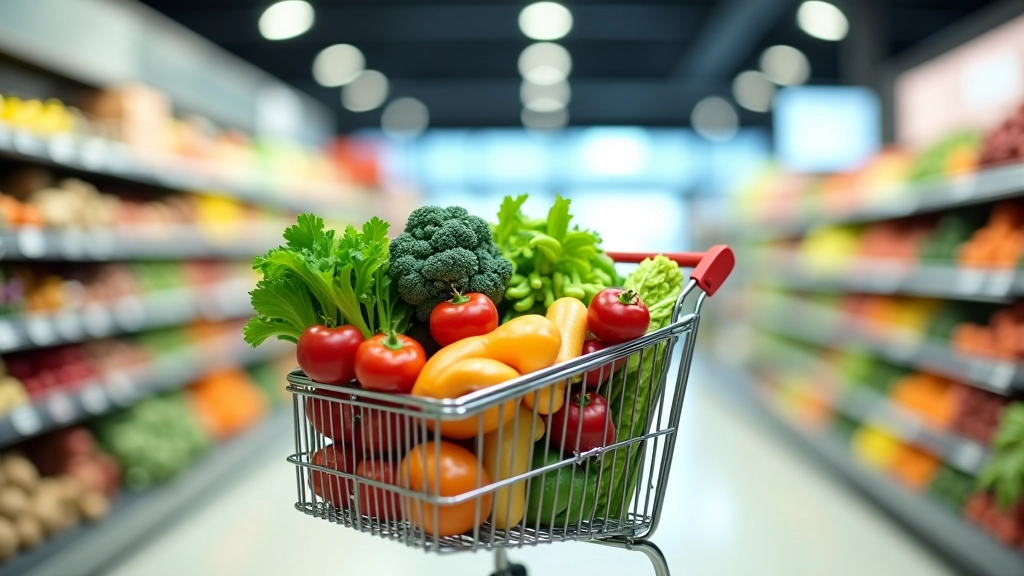
Food Inflation and Your Grocery Budget
How rising food prices impact household spending. We break down which categories have seen the biggest increases and what it means for your budget.
Read MoreHow low, middle, and high-income families spend differently. We break down where money goes and how inflation hits each group uniquely.

Your salary determines more than just your lifestyle. It fundamentally shapes how you allocate every ringgit you earn. Whether you’re bringing home RM2,000 or RM8,000 monthly, the way you spend reveals something important about economic pressures and personal priorities.
National household expenditure surveys show clear patterns. Low-income families spend roughly 50-60% of their income on food and basic necessities. Middle-income households allocate 35-45% to these essentials. High-income families? They’re spending maybe 15-25% on the same categories. It’s not about being wasteful — it’s about having choices.

The survey data reveals distinct spending priorities across income tiers.
Low-income: 50-60%
Middle-income: 35-40%
High-income: 15-20%
Food costs hit hardest for lower earners. When a RM1,500 monthly household sees food prices rise 10%, they’re losing RM75-90 monthly. That’s real pressure.
Low-income: 25-35%
Middle-income: 30-35%
High-income: 20-25%
Rent or mortgage takes a consistent chunk. But higher earners have flexibility — they can upgrade. Lower-income families are stuck in their housing tier.
Low-income: 5-10%
Middle-income: 12-18%
High-income: 10-15%
Middle-income households spend most here — car payments, fuel, maintenance. They’re stretched between public transit and personal vehicles.
Low-income: 3-5%
Middle-income: 8-12%
High-income: 8-15%
This shows opportunity gaps. Low-income families can’t afford private schools or medical insurance. They rely on government services stretched thin.
Low-income: 5-8%
Middle-income: 8-12%
High-income: 10-15%
Necessity versus preference. Lower earners buy basics. Middle and higher earners explore brands, quality, and personal care products.
Low-income: 2-3%
Middle-income: 5-8%
High-income: 8-12%
Entertainment’s a luxury for lower earners. They’re not buying it — they can’t afford to. Wealthier families have significant discretionary spending here.
Here’s where the real inequality shows up. When food prices jump 15% in a year, it doesn’t affect everyone equally. A household earning RM15,000 monthly barely notices. A household earning RM2,000? That’s devastating.
Let’s say food inflation hits 10%. Low-income family spending RM900 on food suddenly pays RM990. That’s RM90 more monthly. But if they’re already tight on rent, utilities, and transportation, that RM90 comes from somewhere else. Maybe they skip medical checkups. Maybe kids don’t get new shoes. Maybe the electricity bill goes unpaid longer.
A high-income family spending RM2,000 on food pays RM2,200. They don’t even notice. They just adjust their restaurant budget or cut back on imported goods. No one goes hungry. No difficult choices.
The Real Impact: Food inflation of 5% costs a low-income household 2.5-3% of their monthly income. The same 5% costs a high-income household 0.7-1%. That’s a 3-4x difference in burden.


After essentials, what remains? That’s where income groups really diverge. Low-income households typically have 5-10% left. Middle-income? Maybe 15-20%. High-income? Often 30-40% or more.
But here’s the twist — that leftover percentage doesn’t tell the full story. A 10% surplus on RM2,000 is RM200. A 10% surplus on RM8,000 is RM800. One person’s building an emergency fund. The other’s building generational wealth.
Low-income families carry proportionally more debt relative to their earnings. They’re relying on credit cards, personal loans, and informal borrowing just to cover gaps. Interest payments become a permanent line item in their budget.
Middle-income households have mortgage debt but also assets. They’re building equity. High-income households? They’ve moved past survival-mode borrowing into strategic debt — investment properties, business loans, calculated leverage.
That’s not moral judgment. It’s just how the math works when you’ve got breathing room.
The same income level doesn’t go the same distance everywhere in Malaysia.
Higher housing costs eat 35-45% of income. Food’s more expensive. Transportation’s mixed — public transit available but often combined with car ownership. Utility costs are standard. Entertainment options are abundant but that’s a choice, not a necessity.
Housing’s cheaper than KL. Food prices are lower. Transportation depends more on cars since public transit is limited. Healthcare and education access is more variable. The same RM3,000 salary stretches further here than in Kuala Lumpur.
Housing’s most affordable. Food might be cheaper if produced locally, or more expensive if imported. Transportation is critical — owning a car isn’t optional. Limited job opportunities mean income’s typically lower. Services require travel.

Understanding these patterns isn’t academic. It affects real decisions and real lives.
When government considers subsidy reductions or tax changes, they need to understand impact differently. A 5% price increase on staple foods is a budget crisis for one household and a rounding error for another. Policy can’t be one-size-fits-all.
If wages rise 3% but food inflation hits 8%, lower-income earners lose ground. They’re running harder just to stay in place. Real improvement requires either controlling inflation or wage growth that outpaces cost increases.
Financial advisors recommend 3-6 months of expenses saved. That’s realistic for high earners. For low-income families living paycheck to paycheck, it’s theoretical. One unexpected medical bill or car repair becomes a debt crisis. That’s not a character flaw — it’s mathematics.
When a low-income earner gets a raise, they’re likely covering existing gaps — better nutrition, maintenance they’ve been postponing, maybe a safer neighborhood. When a high-income earner gets a raise, they’re adding luxuries. Same percentage increase, completely different meaning.
Household expenditure patterns reveal something fundamental about economics. It’s not just that higher earners spend more — it’s that they spend differently. They have choices. They have flexibility. They can absorb shocks.
Lower-income households don’t have that luxury. Their budgets are optimized for survival. When inflation hits, they don’t have discretionary categories to trim. When emergencies happen, they don’t have savings to tap. That’s not a personal failure — it’s structural.
Understanding these spending patterns matters for policy, for business, for anyone trying to understand economic reality. The numbers tell the story. Listen to them.


This article is for educational and informational purposes only. The expenditure data and percentages presented are based on national household surveys and economic research. Individual household spending patterns vary significantly based on personal circumstances, regional factors, and life stage. This content doesn’t constitute financial advice. For personalized financial guidance, consult with a qualified financial advisor. While we strive for accuracy, economic data changes regularly and figures are subject to revision by statistical authorities.