
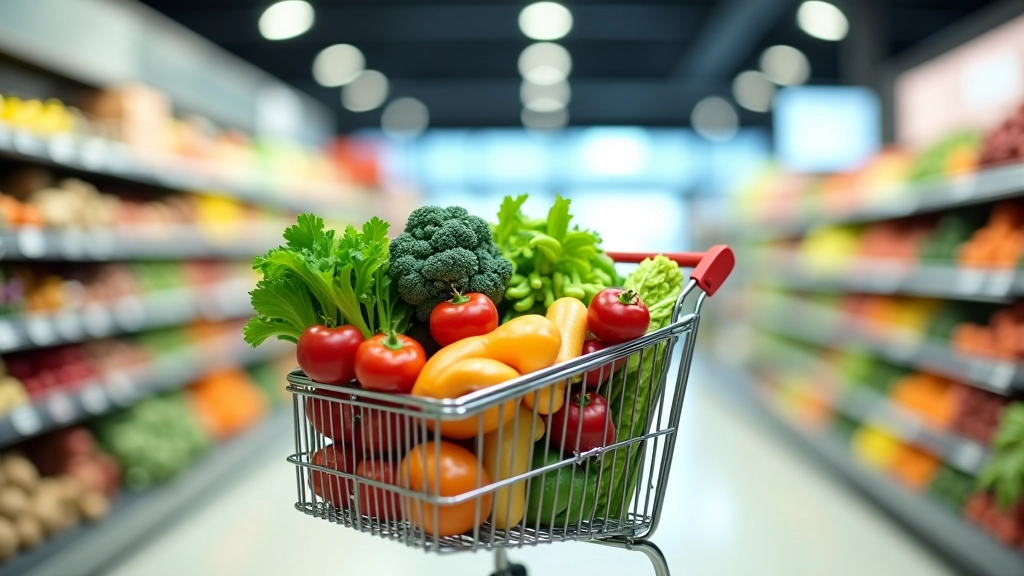
Food Inflation and Your Grocery Budget
How rising food prices impact household spending. We break down which categories have seen the biggest increases and why it matters to your wallet.
Read ArticleExplore how prices change, what impacts your household budget, and where inflation hits hardest across different income groups.

Start with these essential guides to grasp how inflation affects your finances and household decisions.
How rising food prices impact household spending. We break down which categories have seen the biggest increases and why it matters to your wallet.
Read Article
Behind the numbers. Understand the methodology that economists use to track price changes across Malaysia’s diverse economy and what gets included in CPI calculations.
Read Article
How low, middle, and high-income families spend differently. Insights from national surveys showing where money goes and how inflation hits each group uniquely.
Read ArticleThe Consumer Price Index isn’t just a number economists track. It’s a real measure of how much your money’s worth is changing. When CPI goes up, your purchasing power goes down — that’s inflation in action.
Here’s the deal: prices don’t rise equally for everyone. Food costs might jump while transportation stays stable. Low-income households spend more on essentials, so they feel inflation’s bite harder. That’s why understanding CPI patterns matters to your household budget.
We’re breaking down Malaysia’s CPI data into plain language. No complex formulas or jargon. Just clear explanations of how prices are tracked, which categories matter most, and what the data actually means for different income groups across the country.
See how specific categories like food, transport, and utilities have changed over time.
Understand how inflation affects families at different income levels in Malaysia.
Learn exactly how economists measure price changes and what’s included in the calculations.

What the data reveals about inflation, purchasing power, and household spending patterns.
Food and beverages typically represent the largest portion of household spending, especially for lower-income groups. Price changes here hit wallets hardest.
CPI isn’t uniform across Malaysia. Urban areas, rural regions, and different states experience inflation at different rates due to local supply chains and costs.
Lower-income households spend more on essentials that inflate quickly. Higher-income groups have more flexibility in where they allocate spending when prices rise.
As CPI rises, your money buys less. A ringgit today won’t stretch as far next year. Understanding this helps with long-term financial planning.
A simplified look at the process economists use to track price changes across Malaysia’s economy.
Surveyors collect price information from thousands of retail outlets, markets, and service providers across Malaysia. They’re tracking actual prices people pay for everyday items.
Not all spending is equal. Food gets higher weight because families spend more on it. Transport, housing, health, and entertainment each get weighted based on typical household budgets.
Economists compare current prices to a base year (usually set at 100). If CPI is 115, it means prices have risen 15% since the base year. Simple math, real impact.
Monthly reports show how CPI changed from the previous month and year-over-year. This data guides government policy, business decisions, and personal financial planning.
Real feedback from readers who’ve used this data to understand inflation’s impact.
“I wasn’t tracking where my money was going until I looked at the food inflation article. Didn’t realize groceries were eating up 35% of my monthly budget. Now I’m more aware of price changes.”
“The CPI methodology explanation actually made sense. We’re using this in our economics class now because students can finally understand why prices matter beyond textbook definitions.”
“As a small business owner, I needed to understand how inflation was affecting different income groups. This data helped me make better pricing decisions. It’s practical, not just theoretical.”
Common questions we get from people trying to understand inflation and how it affects household budgets.
CPI is the measurement tool — it tracks price changes. Inflation is what it measures. When CPI rises, that’s inflation happening. Think of CPI as the thermometer and inflation as the fever.
Low-income families spend a much larger percentage of their income on food and essentials. When these prices jump 10%, it impacts their budget significantly. Higher-income families have more flexibility to absorb price increases.
CPI data is released monthly, usually in the first few weeks of the following month. This gives a regular pulse on how the economy’s inflation is moving and helps with forecasting.
Absolutely. Understanding CPI trends helps you anticipate price changes, plan for inflation in your savings, and make smarter spending decisions. It’s practical information, not just statistics.
Local supply chains, transportation costs, and regional demand create price differences. Urban areas might have different inflation patterns than rural regions due to logistics and market competition.
As CPI rises, your purchasing power falls. If CPI goes up 5%, your money buys roughly 5% less. That’s why tracking CPI matters for understanding your real financial health over time.
We’ve got comprehensive guides, detailed analysis, and practical insights about CPI, food inflation, household spending patterns, and how purchasing power varies across income groups. Everything you need to understand Malaysia’s cost of living.